R20bn in airport projects poised to take off in Cape Town

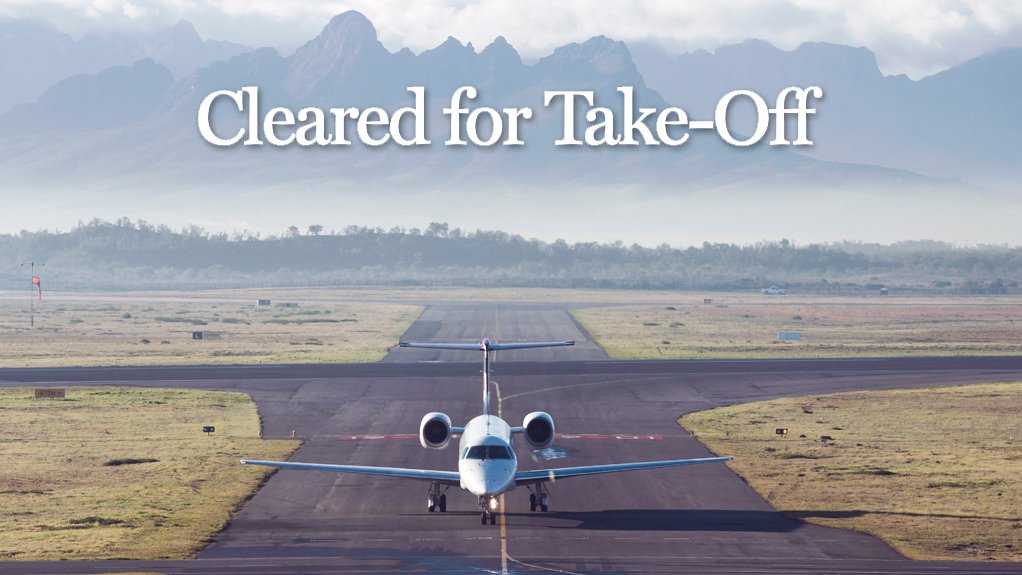



The airspace over Cape Town is set to become much busier in the next two to seven years, with two mega-projects ramping up to allow for increased air traffic to and from the Western Cape capital.
The first project will see Airports Company South Africa (ACSA) spending an estimated R11.3-billion to upgrade and expand Cape Town International Airport (CTIA).
The second is the construction of the new Cape Winelands Airport (CWA) near Durbanville, on the northern outskirts of the city.
This airfield was established in 1943 as a South African Air Force base for Lockheed Ventura bombers.
The CWA project will see an expected initial investment of between R8-billion and R10-billion to develop the terminal buildings, runway and a 450 ha estate around the airport.
Future plans include hotels and a conference centre.
The two projects represent R20-billion-plus in investment in new and upgraded aviation hubs for Cape Town.
Cape Town International
ACSA’s infrastructure programme at CTIA forms part of the State-owned entity’s long-term capital investment strategy aimed at strengthening capacity, modernising ageing infrastructure and supporting projected passenger growth, says ACSA spokesperson Ofentse Dijoe.
ACSA is, in fact, looking to refurbish its entire network of airports by 2032, funding these projects through its own cash pile of R5.9-billion, and capital reserves generated from its operations.
The airport group reported a record net profit of R1.1-billion for the financial year ended March 31, 2025, more than double the R472-million achieved in 2023/24.
The capital expenditure (capex) programme at CTIA includes developments across landside facilities, terminal infrastructure and airfield operations.
The landside infrastructure programme will see the expansion of the car rental precinct to accommodate additional operators and increased vehicle capacity, in a project that will take 30 months to complete once the contractors have been appointed.
The terminal infrastructure programme will include construction of a new domestic arrivals terminal; extension of the existing domestic departures terminal, including three additional passenger loading bridges with contact stands and expanded lounge facilities; and upgrades within the international terminal aimed at improving the passenger experience, with a particular focus on addressing capacity pressure points.
The airfield infrastructure rollout will see the construction of a new Code F-compliant runway with associated airfield services; two new Code F aircraft contact stands; the reconfiguration of an existing Code E aircraft stand to accommodate Code F aircraft; and three new narrow-body Code C aircraft stands.
The mention of ‘Code F’ here is of most significance, as it refers to the giants of the sky with a wingspan of between 69 m and 79 m, such as the Airbus A-380-800 or Boeing 747-8 – which means that ACSA is readying CTIA to receive some rather large visitors from abroad.
The CTIA capex programme will also see the construction of a new perimeter fence to strengthen airfield security.
Project timelines range from 19 months for the new wide- and narrow-body aprons, to 24 months for the realigned runway, 60 months for the interventions at the international terminal, and 85 months for the work at the domestic terminal, once contractors have been appointed.
“In total, the estimated capital spend is R11.3-billion,” says Dijoe. “All of these figures represent current planning estimates and remain subject to final procurement outcomes.”
All works will be sequenced to minimise disruption to passengers and airlines and to ensure operational continuity, he adds.
The release of the first construction tender is on the cards for June, with award anticipated by December, subject to State procurement processes.
“These developments are all intended to enhance operational resilience, increase passenger processing capacity and support the long-term growth trajectory of CTIA,” notes Dijoe.
“Current projections indicate continued growth in both domestic and international travel at CTIA. The planned infrastructure interventions are intended to ensure the airport can accommodate these forecasted volumes efficiently.”
CTIA handled a record-breaking 11.1- million two-way passengers (domestic and international) in 2025, according to Cape Town Air Access (CTAA).
CTAA is an air-route development project targeting both passengers and air cargo for Cape Town and the Western Cape.
According to ACSA statistics, CTIA handled 8-million domestic passengers in the 2025/26 financial year, 3.13-million international passengers, and 234 572 regional passengers.
This is up significantly from 2024/25’s 7.37-million domestic passengers, 2.9-million international passengers, and 208 684 regional passengers.
Cape Winelands Airport
ACSA’s planned upgrades come amid rapid advances to build a new multibillion-rand privately owned airport on the northern edge of Cape Town.
CWA, 13 km north-east of Durbanville, is set to be developed on the site of an airfield previously known as Fisantekraal.
RSA Aero will own and operate the airport. Its management and board include some former and current heavyweights in the domestic airline industry, such as an erstwhile ACSA CEO and Air Force chief.
At this stage, the start of construction of CWA is planned for the end of this year, with the airport to be commissioned in the later part of 2028 – right in the midst of the CTIA revamp.
CWA’s customers are expected to come from Cape Town, as well as the nearby Stellenbosch, Paarl, Wellington and the West Coast.
CWA hopes to welcome two-million passengers a year by 2030, and five-million by 2050 – which means it is targeting a 50% share of all new Cape Town passengers from 2030 to 2050.
The project in Cape Town has already received environmental authorisation from the Western Cape Department of Environmental Affairs and Development Planning.
Boogertman + Partners has also been appointed as the lead architects overseeing the architectural vision and design integration of the airport.
The architectural team will collaborate with amd.sigma, an airport development company based in Berlin, Germany, and a wholly owned subsidiary of Munich Airport International, in rolling out the project.
The CWA team has also appointed construction giant Wilson Bayly Holmes-Ovcon to take responsibility for the technical development and construction of the airport complex.
“With the contractor now formally on board, the project advances into a crucial new phase – detailed technical development and planning,” says CWA MD Deon Cloete.
The project has already secured an investment, development and managing partner in the form of Growthpoint Properties, which has made an initial undisclosed investment in the project, and holds the right to future investments as well.
Under the agreement between the two entities, Growthpoint will assume long-term property and asset management responsibilities across the 450 ha aviation precinct’s logistics, commercial and hospitality components, which excludes the terminal buildings, with the right of first refusal to co-invest in future property developments.
The JSE-listed property group will also oversee WBHO to ensure delivery.
Growthpoint, which co-owns the V&A Waterfront and holds group property assets to the value of R155.8-billion, has noted experience in developing large-scale, mixed-use and tourism-led precincts.
What the CWA project does not have at the moment, however, is the title ‘international airport’.
This designation will allow it to handle international air traffic, as is the case at the privately owned Lanseria airport in Gauteng.
An international designation has significant implications, as it means the presence of national bodies such as the Border Management Authority, as well as Customs and Excise, for example.
CWA submitted its international licence application in the latter part of 2024, but is still awaiting feedback from national government.
“This is a key decision and has a direct impact and correlation to our build programme,” a CWA spokesperson tells Engineering News & Mining Weekly.
“We remain optimistic that the outcome of this is imminent.”
When it comes to CWA versus CTIA, nobody wants to talk competition, but it can be expected that both airports will work hard to attract airlines and passengers to their facilities.
CTIA is currently struggling with a number of security issues around its perimeter, with a rising number of attacks on motorists having been reported on the way to and from the airport.
It would be naïve to expect that CWA may not suffer the same fate if not expertly managed – with cooperation from landowners and all three tiers of government a necessity – as the CWA site is surrounded by large swaths of open and agricultural land, which creates the potential for challenges such as illegal land occupation and contact crime, as has been the case around CTIA.
There are also benefits to having two airports in any metro, as is the case in many cities abroad, such as London and New York, for example.
“ACSA’s focus remains on ensuring that CTIA continues to invest in infrastructure that supports passenger growth, connectivity and regional economic activity within the broader Western Cape aviation and tourism ecosystem,” notes Dijoe.
“Gauteng is an example of how two airports [OR Tambo International Airport and Lanseria International Airport] can coexist and complement each other.
“There are benefits for the Western Cape having two airports that can offer an option when flights need to be diverted due to inclement weather.”
Passenger demand may also grow to such an extent that one airport may be unable to cope.
Growth to Cater for Both Airports?
Government’s draft National Airports Development Plan (NADP), published last month, notes that there is scope for more South Africans to take to the sky.
“Evidence from the sector and from the most recent household survey on income and expenditure indicates that only about 10% of South Africans are flying today; in developed markets like the UK, the figure is around 50%,” states the report.
“This suggests there is considerable scope left for new demand to come into the market as income levels rise.”
The development plan notes that the two biggest considerations regarding the future growth of the aviation sector in South Africa (over and above economic growth, with rising disposable income stimulating travel demand) are the levels of market penetration and the degree to which low-cost carriers (LCCs) can continue to grow.
“Over the medium term, as long as the macroeconomy supports continued widespread growth in income levels and as long as the economics of the sector do not shift dramatically (such as rising fuel prices), the LCC sector should be able to continue to grow by opening up access to flying to more and more South Africans.”
In a presentation to the parliamentary portfolio committee on tourism last year, ACSA said it handled 38-million passengers at ACSA’s ten airports in 2024.
By 2042, the group expects this to almost double to 71.2-million passengers, which means that all of South Africa’s airports – old and new – would need to expand to keep pace with demand.
Private Sector Participation
The NDAP also hints at the increased participation of the private sector in the country’s airports, similar to processes that have been set in motion at the country’s port and rail networks.
“Findings of a desk-top study on airport ownership, operation and funding options in the US, Europe, Australia, Japan, India, illustrate that corporatisation, commercialisation and privatisation of airports had become a worldwide trend.
“This brings considerable change in airport ownership, governance and institutional settings.
“It shows that airports are no longer positioned solely as public utilities delivering airside services to airlines, terminal retail, access services to passengers and additional ancillary services.
“There is increasing involvement of the private sector in the management and the financing of airports, both in developed and emerging markets.”
One of the local initiatives proposed for the next five years, says the NDAP, is the exploration of potential mechanisms to involve the private sector in airport planning and design, including concession models, long-term leases with associated responsibilities for upgrading infrastructure, and technical input from specialist infrastructure private financiers.
“It must be noted, however, that the potential privatisation of major airports will require special attention and approval from the appropriate authorities,” notes the draft plan.
Article Enquiry
Email Article
Save Article
Feedback
To advertise email advertising@creamermedia.co.za or click here
Research Reports
Projects

Latest News
Showroom
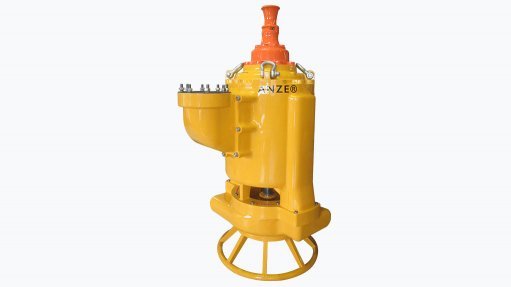
Goodwin Submersible Pumps Africa is sole distributors for Goodwin electrically driven, submersible, abrasion resistance slurry pumps.
VISIT SHOWROOM
Your global lifecycle technology & service partner for materials & minerals processing equipment for coal, iron ore, copper, manganese & other...
VISIT SHOWROOM

Press Office
Announcements
What's On
Subscribe to improve your user experience...
Option 1 (equivalent of R125 a month):
Receive a weekly copy of Creamer Media's Engineering News & Mining Weekly magazine
(print copy for those in South Africa and e-magazine for those outside of South Africa)
Receive daily email newsletters
Access to full search results
Access archive of magazine back copies
Access to Projects in Progress
Access to ONE Research Report of your choice in PDF format
Option 2 (equivalent of R375 a month):
All benefits from Option 1
PLUS
Access to Creamer Media's Research Channel Africa for ALL Research Reports, in PDF format, on various industrial and mining sectors
including Electricity; Water; Energy Transition; Hydrogen; Roads, Rail and Ports; Coal; Gold; Platinum; Battery Metals; etc.
Already a subscriber?
Forgotten your password?
Receive weekly copy of Creamer Media's Engineering News & Mining Weekly magazine (print copy for those in South Africa and e-magazine for those outside of South Africa)
➕
Recieve daily email newsletters
➕
Access to full search results
➕
Access archive of magazine back copies
➕
Access to Projects in Progress
➕
Access to ONE Research Report of your choice in PDF format
RESEARCH CHANNEL AFRICA
R4500 (equivalent of R375 a month)
SUBSCRIBEAll benefits from Option 1
➕
Access to Creamer Media's Research Channel Africa for ALL Research Reports on various industrial and mining sectors, in PDF format, including on:
Electricity
➕
Water
➕
Energy Transition
➕
Hydrogen
➕
Roads, Rail and Ports
➕
Coal
➕
Gold
➕
Platinum
➕
Battery Metals
➕
etc.
Receive all benefits from Option 1 or Option 2 delivered to numerous people at your company
➕
Multiple User names and Passwords for simultaneous log-ins
➕
Intranet integration access to all in your organisation